 The Mid-Career Digital Shift
Mid-Career Futures
The Art of Becoming (Again)
Read original on LinkedIn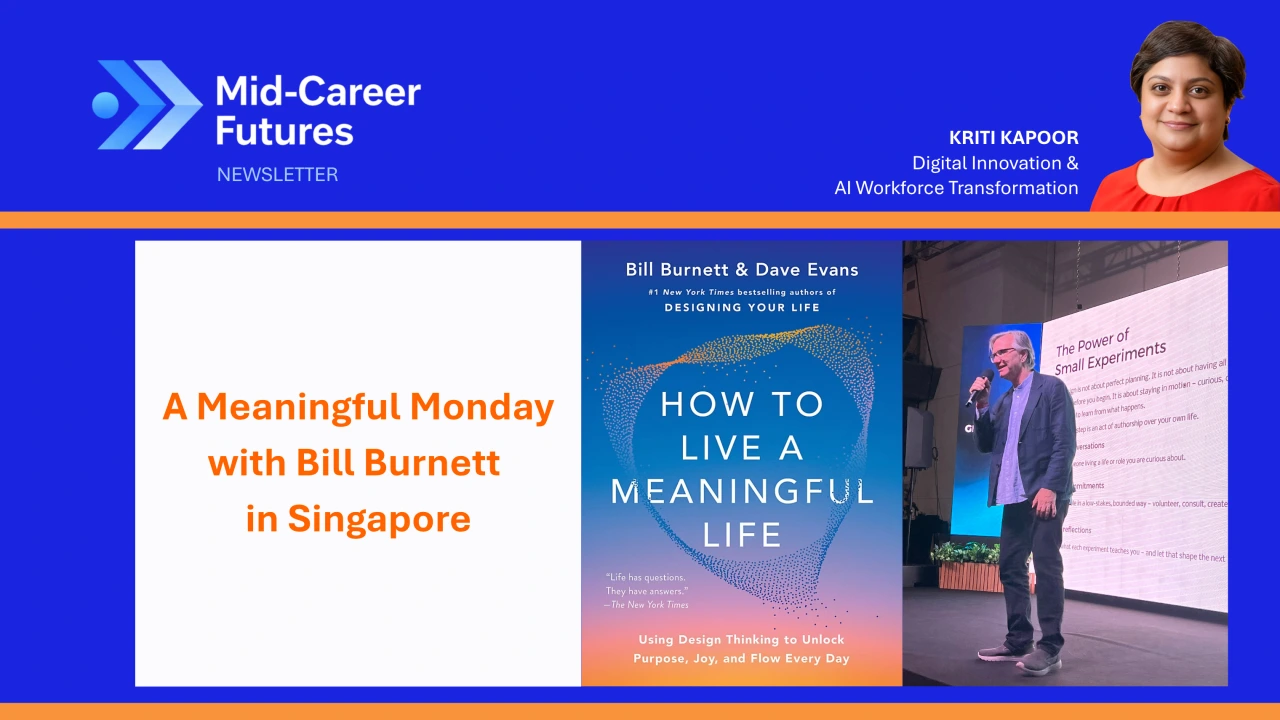
What does it mean to live a meaningful life in an age of AI, longer lives, and constant change?
23 March 2026. Monday evening. The Glass Dome in Singapore. Bill Burnett on stage, co-founder of Stanford's Life Design Lab, launching his new book How to Live a Meaningful Life, co-authored with Dave Evans.
The room holds 300+ professionals, most in their 40s and 50s. The opening provocation lands fast: work is changing faster than the roles we trained for. Careers have shifted from ladders to lattices. Identity is fluid, shaped by what we do next rather than what we did for the last twenty to thirty years.
Then comes the line that most of us feel but rarely say aloud:
"We are in a stage where many of us are re-authoring our lives."
And one sentence cuts through the rest.
Most mid-career professionals I know and work with are talented, driven, and experienced. They are also exhausted from running hard on a machine that stopped going anywhere.
The talk named it the Impact Problem. We chase outcomes. We collect achievements. And the glow fades fast. The finish line keeps moving.
People in the room nodding along. Because someone finally named it.
This is the tension I see across enterprise transformation work consistently. Leaders who have spent 20+ years building expertise, who are now told to "reskill" as if their experience is a liability. The treadmill is personal and structural. Organizations put their most experienced people on it and wonder why transformation stalls.
Two Worlds, One Choice
One distinction hit differently in person than it would on a slide: we are often living in one of two worlds.
The Transactional World. "Got to" mode. Task lists. Obligation. Checking boxes. Getting through the day.
The Flow World. "Get to" mode. Ownership. Curiosity. Engagement with work that actually matters.
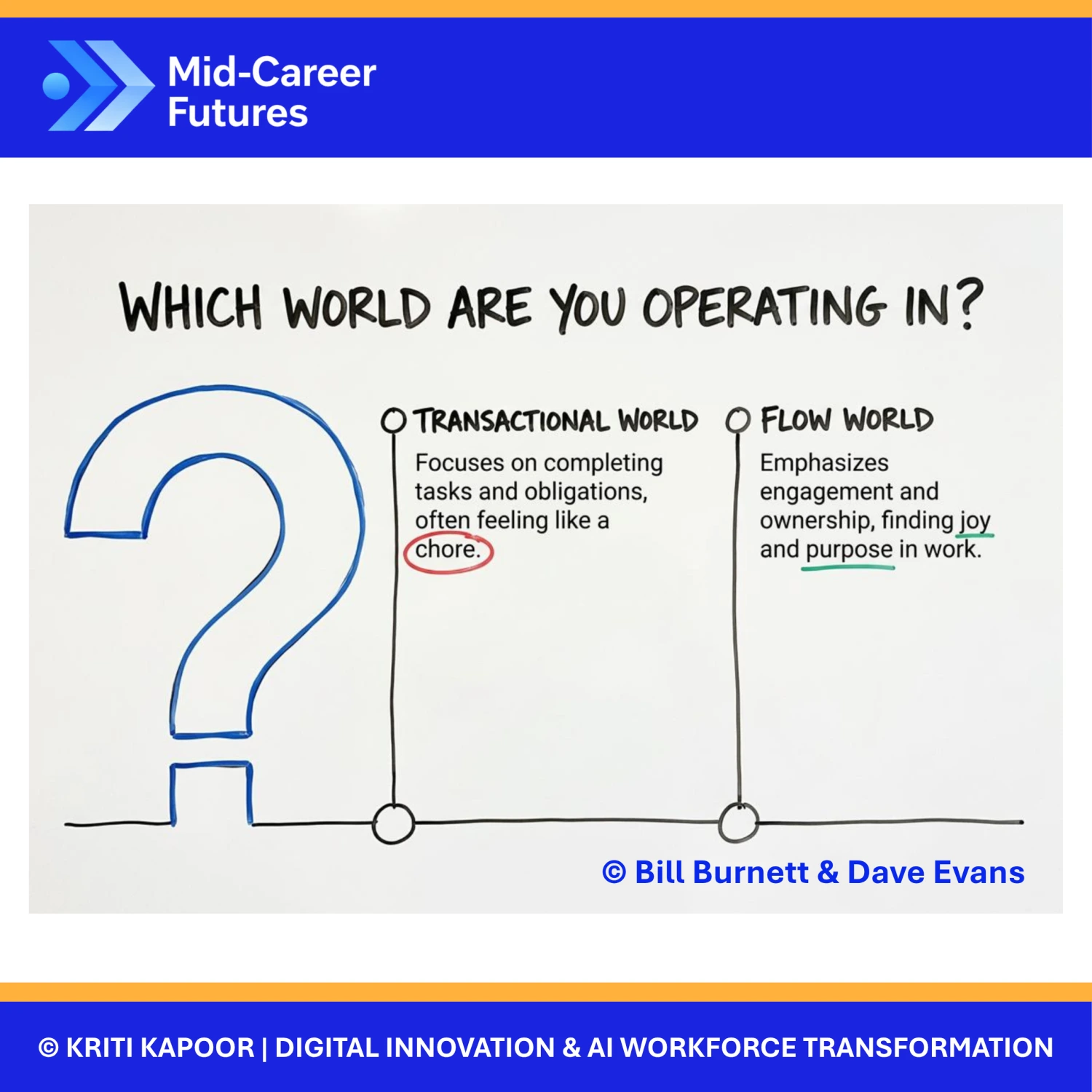
The shift between them is deeper than a productivity hack. It's a state change. And for mid-career professionals navigating AI, restructuring, and constant pivots, this distinction matters more than most frameworks.
I've seen this play out across transformation programs I've led. The teams that treat technology adoption as a checklist ("got to" mode) plateau fast. The teams that approach it as an opportunity to redesign how they work ("get to" mode) create compounding value.
That language gives us a clean way to diagnose what's happening. When your people are stuck, the first question worth asking: "Which world are they operating in?"
Coherence: The Word We Keep Missing
The most powerful framework of the evening was deceptively simple.
Meaning emerges when three things align:
- What you believe. Your values, your worldview, what you think matters.
- Who you are. Your identity, how you show up, what you stand for, your lifeview.
- What you do. Your daily work, your projects, your commitments.
When these three connect, you get coherence. When they fall out of sync, you get the mid-career fog that upskilling alone will struggle to clear.
This is what I keep telling CHROs and Chief Transformation Officers: the skills gap is real, and the coherence gap sits underneath it. 73% of mid-career professionals report feeling disconnected from the strategic direction of their organizations. That's an alignment issue first, a training issue second.
Their coherence model maps directly onto what I define as Bridge Value. Experienced professionals bring essential expertise that creates the translation layer between strategy and execution. When they lose coherence, the bridge breaks. When they find it, transformation accelerates.
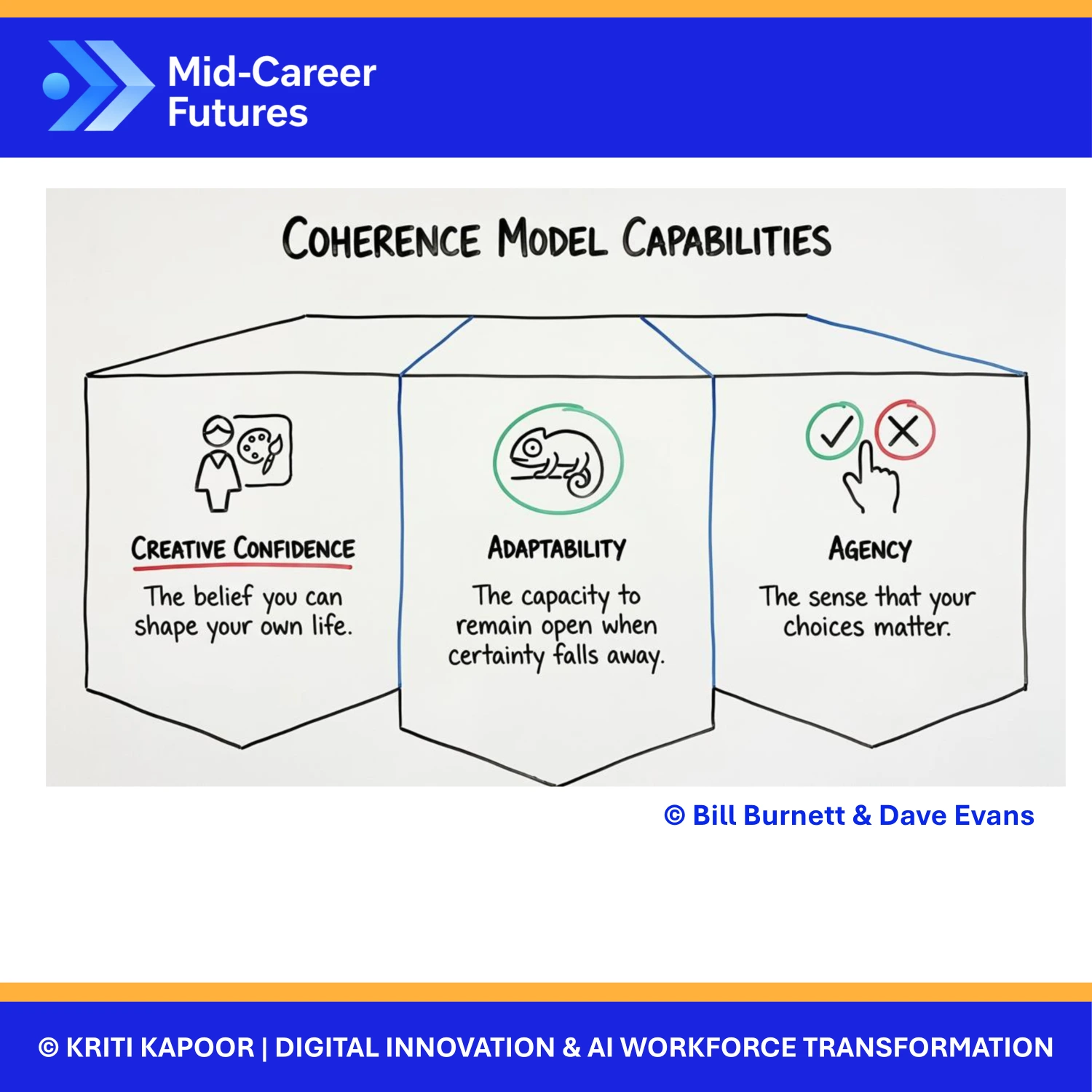
And the capabilities that make coherence possible?
The talk named three: creative confidence (the belief you can shape your own life), adaptability (the capacity to remain open when certainty falls away), and agency (the sense that your choices matter). These are the same capabilities that distinguish mid-career professionals who lead transformation from those who endure it.
The Prototype Mindset
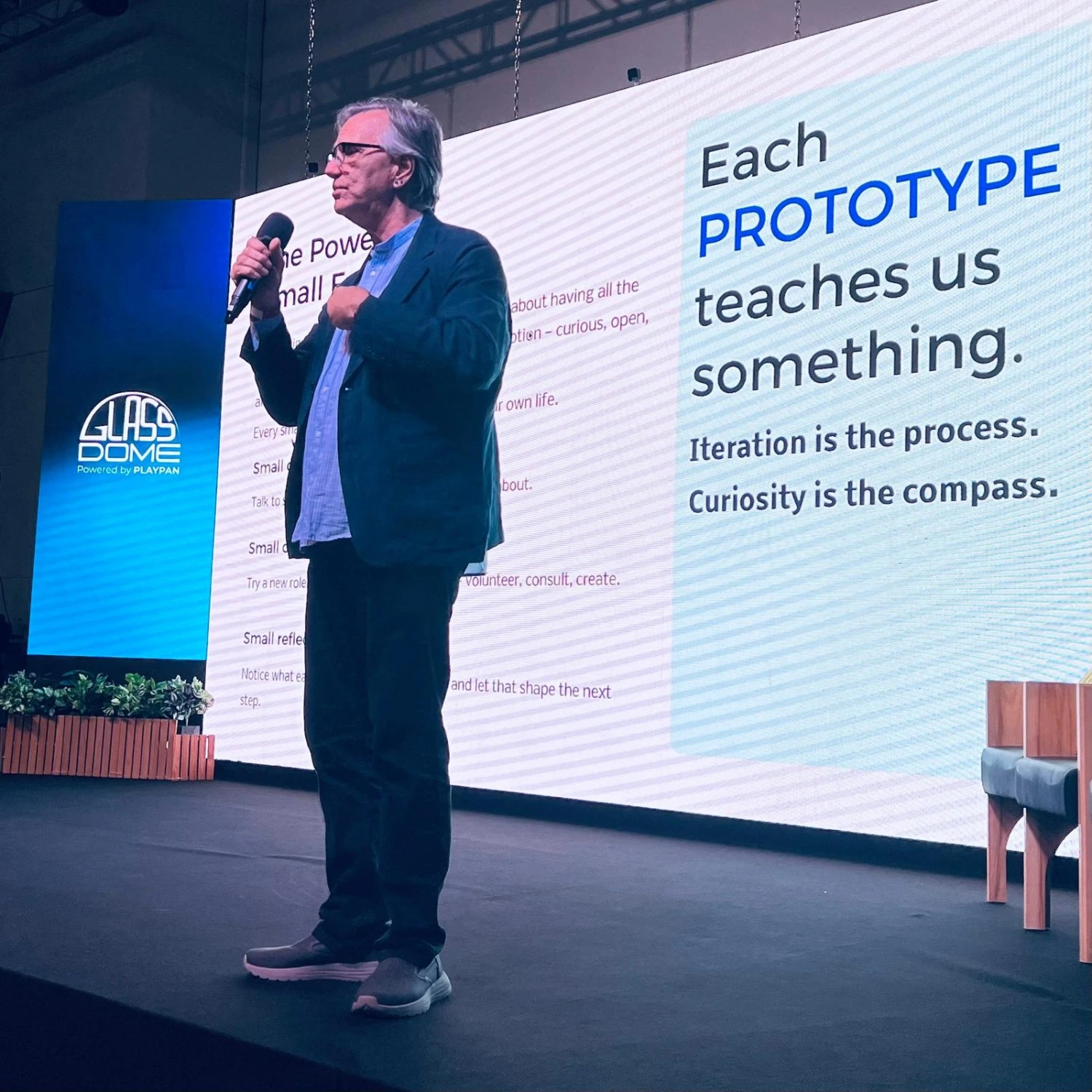
The challenge to the room: replace "What is my next job?" with "What role might I prototype next?"
A prototype is a question made visible. A small, low-risk experiment that gives you real information while keeping the stakes manageable.
This is the ADAPT Method in different language, and a core framework in my upcoming book The Mid-Career Digital Shift. Acknowledge where you are. Determine what matters most. Activate one small experiment. Partner with tools and people to learn faster. Translate what you discover into visible progress.
Career design and life design share the same operating principle: small moves, consistently made, transform trajectories. A 30-day experiment and the courage to learn from it will take you further than a five-year plan.
What I Took Away (Personally)
I went to this event as a curious professional and a fan of Bill and Dave's Designing Your Life work. I stayed as a lifelong learner.
After nearly 20 years of leading regional and global transformation programs across Microsoft, HP, UiPath, and Dell, I know what it feels like to be the person in the room with the frameworks and the data. The evening reminded me of something I write about but sometimes forget to practice: transformation starts with how you see yourself.
I met Bill just before his talk. We spoke briefly about what mid-career professionals actually need. His answer was direct: "They need permission to experiment with who they're becoming."
I'd take it one step further. We need to give ourselves that permission. Permission to experiment. To fail. To learn. To try again. The process of becoming asks us to stay in motion, especially when the path forward is unclear. Who we are meant to be, and who we are meant to serve in this next chapter, reveals itself through action.
That's the work. Yours and mine.
Your Move This Week
- Diagnose your world. Are you operating in "got to" or "get to" mode? Be honest. The answer shapes what comes next.
- Check your coherence. Write down what you believe, who you are, and what you do. Do they connect? Where's the gap?
- Pick one prototype. One conversation, one project, one small experiment you can run in the next 30 days. Make it specific. Make it low-risk. Make it real.
Transformation happens in spaces and conversations. Find your tribe.
Heartfelt gratitude to Mark Wee and the DYLg team for making this meaningful conversation a reality.
Some days will be harder than others. We can do this, bit by bit.
For more: designingyour.life | How to Live a Meaningful Life by Bill Burnett & Dave Evans.
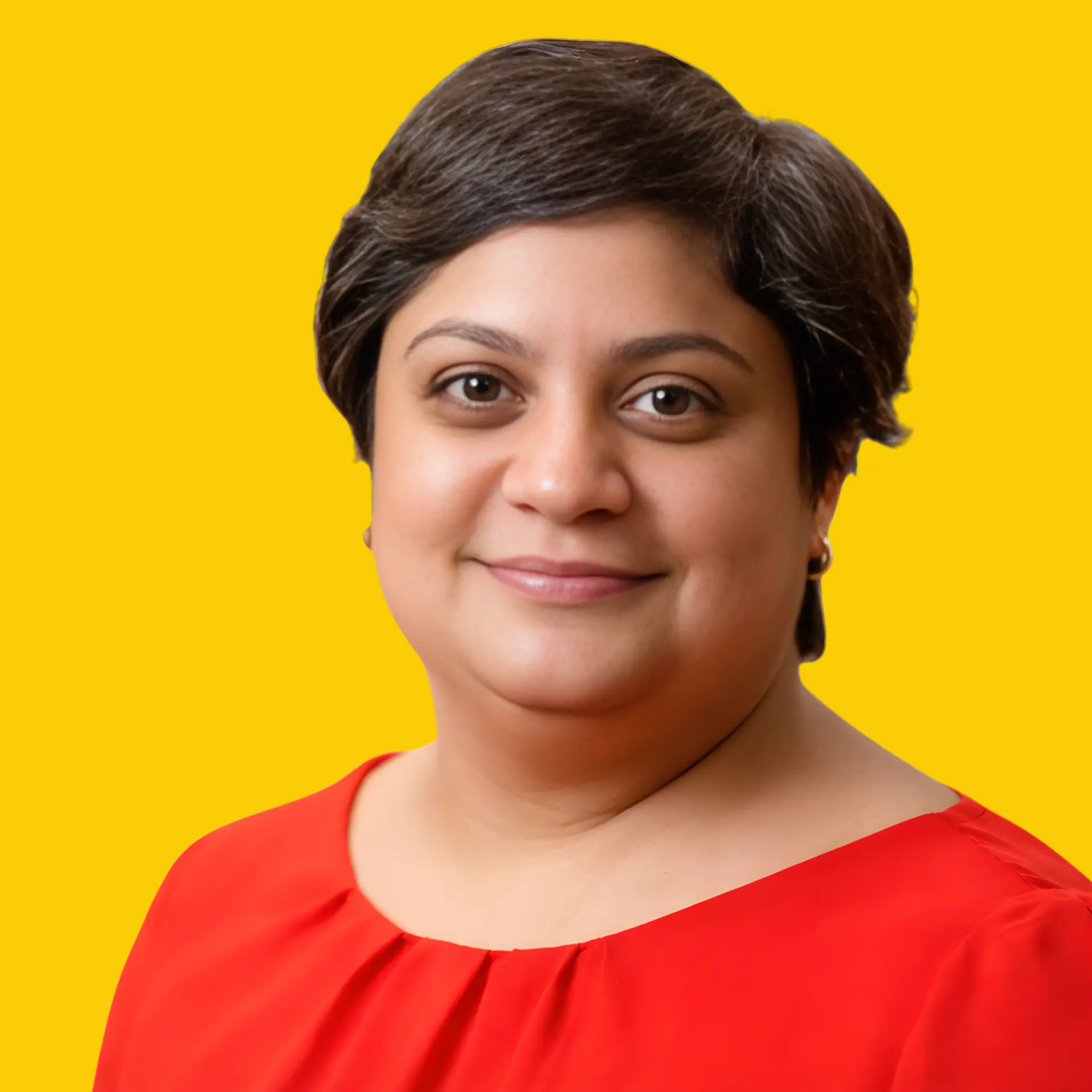
Kriti Kapoor
Digital Innovation & Workforce Transformation
Author, The Mid-Career Digital Shift