 The Mid-Career Digital Shift
Mid-Career Futures
The Paradox of Progress: Why Your Best Breakthroughs Happen When You Stop Forcing Them
Read original on LinkedIn
(c) Kriti Kapoor | #midcareerfutures
Lately, I have been trying on different professional suits: Adjunct Lecturer. Strategic Advisor. Principal Consultant. Executive Educator. VP of Workforce Transformation. Head of Community. Chief Learning Officer.
Each draws on a different part of who I am, what I enjoy and where I can create the greatest value: the educator, the transformation leader, the community builder, and the architect of workforce capability. Some fit naturally with the experience I have built over decades. Others represent exciting departures from what I have done before.
The harder I try to decide which suit I should wear, the further away clarity seems to move.
I am beginning to understand that perhaps the right fit cannot be forced.
Some possibilities can only be understood in flight. I need to step into them, have conversations, meet people, test ideas, and experience how they feel beyond the confines of my own thinking.
Perhaps this season calls for a gentler approach: staying open, listening more deeply, and allowing direction to emerge through experience and action.
Often, we find clarity in our direction by taking the next step instead of expecting the entire map.
A Global Mid-Career Shift
My experience is deeply personal, yet it is shared by millions.
In The Mid-Career Digital Shift, I use a conservative estimate of 300 to 400 million mid-career professionals worldwide who are navigating a shift of some kind.
Some are adapting to AI and automation. Others are moving into leadership role, switching industries, returning after a career break, recovering from redundancy, or questioning whether the work that once defined them still fits the person they have become.
Many are trying to bridge analog expertise, digital systems, and an AI-enabled future while carrying the responsibilities that often intensify in mid-career. They are supporting families, caring for parents, managing financial commitments, and trying to stay relevant in workplaces transforming faster than ever.
Their challenge reaches beyond acquiring new skills. It is often a deeper shift in identity, confidence, relevance, and purpose.
I wrote The Mid-Career Digital Shift for people facing this quiet uncertainty. The book offers a roadmap to help experienced professionals translate hard-won expertise into new forms of value, navigate the AI economy with greater confidence, and make their next move with clearer intention.
Now I find myself living another version of the transition I wrote about.
That is an important reminder: the mid-career shift is rarely a single event. We may reinvent ourselves more than once. Each new season asks us to reconsider what we want to carry forward, what we have outgrown, and what is ready to emerge.
When Effort Becomes Friction
We often believe that the intensity of our struggle is a measure of our commitment.
We white-knuckle our way toward a goal, overthink every variable, and try to control exactly how and when success should arrive. Yet this “try-hard” energy can create a bottleneck.
There is a meaningful difference between productive action and counterproductive friction.
Productive action creates movement. It might involve starting a conversation, testing an idea, developing a skill, asking for help, or trying something before we feel completely ready.
Counterproductive friction consumes energy without moving us forward. It appears as constant overthinking, self-pressure, artificial urgency, and the demand that we solve everything immediately.
When we grip an outcome too tightly, anxiety begins to absorb the energy we need for discovery. Sustained tension exhausts the body and narrows the mind. It can prevent us from noticing the very ideas, people, and possibilities that might help us find our way.
Softening our grip creates space for a different kind of intelligence. We become more present, receptive, and discerning. We can see what is changing around us and hear what our own experience is trying to tell us.
A breakthrough may require less force and a different quality of energy.
What might we notice if we stopped chasing answers with frantic intensity and became more attentive to what is already emerging?
Finding Safety in the Unknown
We search for certainty because we want to feel safe. We seek reassurance that our choices will work, our efforts will pay off, and we will avoid disappointment. We imagine that if we can find the perfect map, we can protect ourselves from mistakes.
But searching for a map that does not yet exist is exhausting.
The deeper shift occurs when we learn to be comfortable with uncertainty while maintaining a sense of inner safety. We move from needing to predict exactly what will happen to trusting our ability to respond to what unfolds.
The unknown then becomes an open space.
What we need is confidence in our capacity to adapt, learn, recover, and make new choices as the path reveals itself.
This is one of the central ideas in The Mid-Career Digital Shift. Adaptability reaches far beyond keeping up with new technologies. It is the capacity to remain grounded, curious, and capable while the environment around us changes.
“Adapt confidently” means trusting ourselves to keep learning and moving, even when we cannot see the complete path ahead.
The Gift of the Closed Door
When a plan fails or a door closes, our first instinct may be to panic.
We look at other people’s lives and wonder, “Am I falling behind?” We compare our timeline with theirs and create pressure around a schedule that may never have been ours.
Yet moments of friction can serve a purpose.
Some goals need more time to mature. Detours help us develop the capacity required for what comes next. Closed doors protect us from paths that would have depleted our energy or taken us further away from ourselves. Rejection can be redirection, even when it does not feel that way at first.
We can grieve the path we expected to take while remaining open to possibilities we cannot yet see. The story is still unfolding.
Letting Clarity Emerge Through Action
Meaningful change rarely comes from one dramatic leap. More often, it is built through a series of small, aligned steps.
We discover what fits by engaging with the world, gathering evidence, and paying attention to our responses.
Notice what gives you energy and which conversations make you feel more alive. Pay attention to the problems you feel drawn to solve, the people you want to serve, and the environments in which you feel most in your element. Also observe what consistently diminishes you. That information matters too.
This is especially important in mid-career. We already have years of evidence about how we work, where we create value, and what matters to us. The task is to interpret that evidence through the lens of who we are becoming.
Our experience is raw material for career reinvention, reorientation or redesign. It gives us patterns to examine, strengths to redeploy, and wisdom to carry into a changing world.
Every conversation, experiment, and experience gives us another piece of the terrain.
Then we take the next step we can see.
Moving With the Current
Moving from force to presence is an act of self-trust. It means taking purposeful action while allowing the outcome to evolve; knowing when to move, to pause, and to give something more time to take shape.
There are seasons for decisive action and others for exploration, recovery, listening, and renewal. Wisdom lies in recognizing which season we are in and responding accordingly.
For me, this season is about remaining in motion without demanding premature certainty. It is about meeting people, testing possibilities, following what creates energy, and allowing the next chapter to emerge through lived experience. I do not need to have the next ten years figured out before taking the next meaningful step.
Perhaps this is what a mid-career digital shift really looks like from the inside. It is part professional reinvention, part personal renewal, and part learning to trust ourselves again.
The journey invites us to carry our experience forward while loosening our attachment to the form our future must take. We must stop fighting the water, and learn to move with the current. And one step at a time, the way forward begins to reveal itself.
Pause for reflection: What might become possible if you loosened your grip, stayed open, and trusted yourself to recognize the next step when it appeared?
Methodology note: The estimate of 300 to 400 million mid-career professionals is a directional calculation developed for The Mid-Career Digital Shift. It applies assumed shares for knowledge-intensive work and mid-career professionals to global labour-force data. Because no global dataset tracks this population as a distinct category, the range should be treated as an estimate. The global labour-market baseline is informed by the International Labour Organization’s World Employment and Social Outlook: Trends 2025.
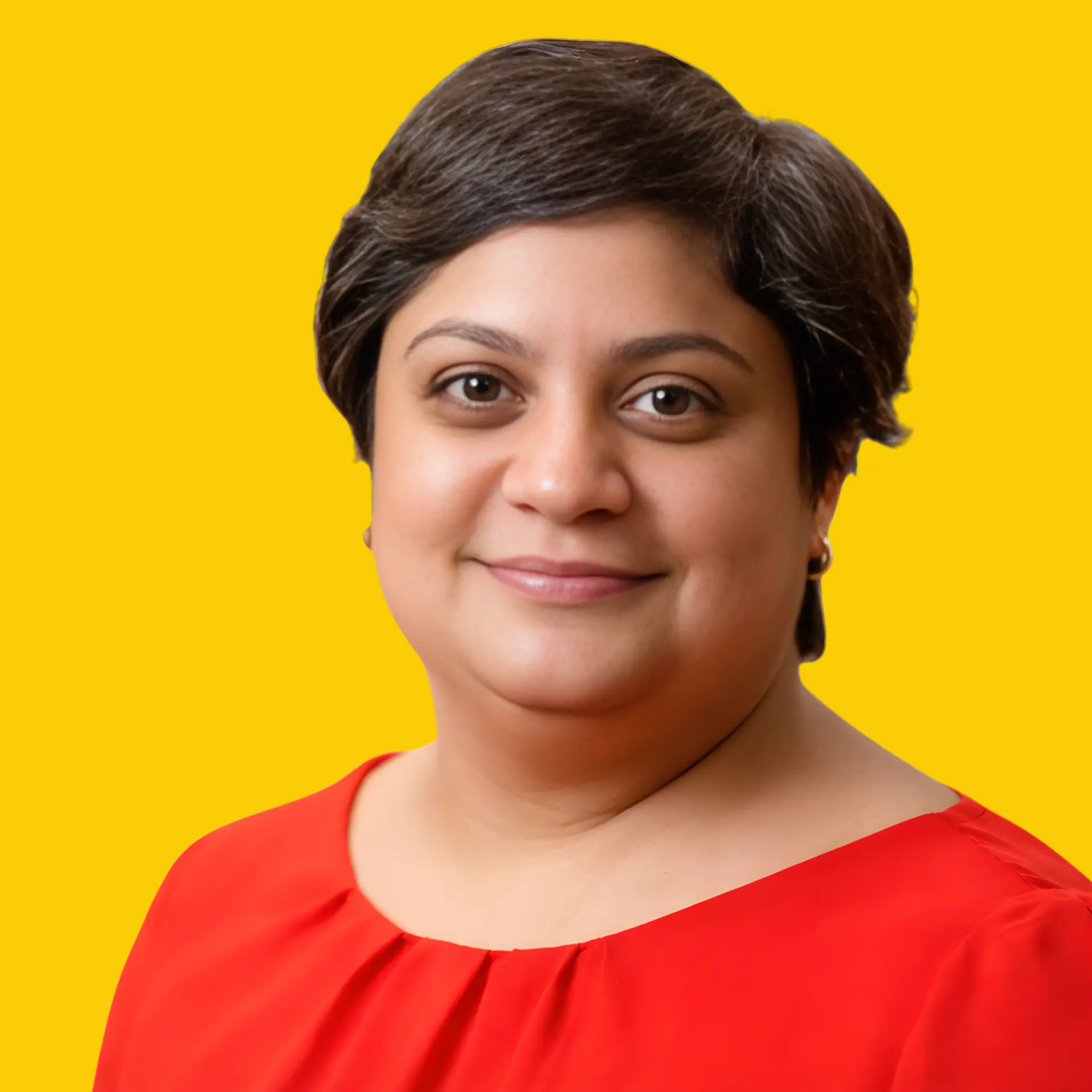
Kriti Kapoor
Digital Innovation & Workforce Transformation
Author, The Mid-Career Digital Shift